How Long Does Fentanyl Stay in Your System?
Fentanyl is a powerful synthetic opioid that can be up to 100 times stronger than morphine. Originally developed for severe pain relief in medical settings, fentanyl has also become one of the most dangerous substances involved in opioid misuse today. Even small amounts can lead to overdose or death—especially when it’s mixed into street drugs without warning.
If you or someone close to you is struggling with fentanyl use, it’s important to understand how long fentanyl stays in your system—and why recovery might be the safest next step.
Fentanyl is commonly prescribed for severe or chronic pain, especially in cancer patients or post-surgical cases. However, it’s also made and sold illegally, often mixed into street drugs without the user’s knowledge.
Fentanyl binds to the brain’s opioid receptors and produces an intense sense of relief and euphoria. While it may be prescribed for chronic pain, most fentanyl-related overdoses come from illicitly manufactured versions that are far more unpredictable.
Because fentanyl is so potent, it doesn’t take much to cause dependency. Continued use can rapidly shift from controlled dosing to compulsive behavior and physical addiction. Because of its potency, fentanyl carries a high risk of addiction and overdose—even after just one use.
Detection Times: How Long Does Fentanyl Stay in the Body?
Fentanyl’s presence in the body depends on factors like metabolism, age, weight, dosage, liver function, and how long the drug has been used. Here’s a general breakdown of how long fentanyl may show up on different types of drug tests:
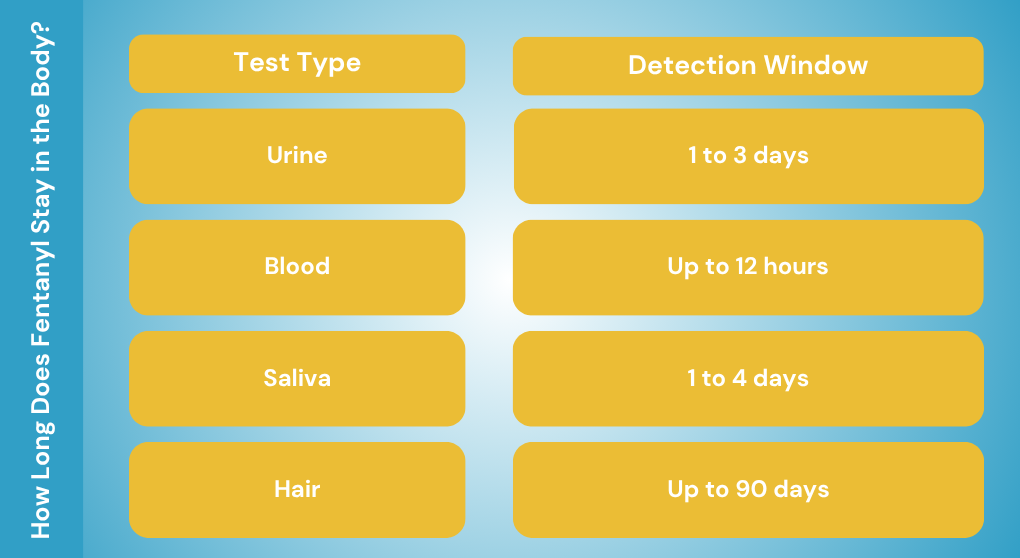
The drug’s half-life—how long it takes for half the substance to leave your system—ranges from 3 to 12 hours, depending on the method of ingestion. However, traces may linger much longer, particularly in individuals with long-term use or slower metabolic rates.
Why Detection Time Matters
Many people ask how long fentanyl stays in their system for different reasons—concerns about withdrawal, drug testing, or overdose risk. But if this question is coming from a place of concern—either for yourself or a loved one—it may be time to consider something more important than detection: recovery.
Knowing how long fentanyl can be found in the body is useful, but it doesn’t address the bigger issue. Frequent testing, counting hours, and worrying about symptoms can become part of a cycle that feels impossible to escape. That’s where real support makes a difference.
Fentanyl use is often tied to more than physical dependence. Emotional pain, stress, trauma, and loss can all play a role. Getting help isn’t just about stopping the drug—it’s about building a new way to live without it.
If you’re looking for answers, that’s already a sign of courage. Recovery starts when you choose to do something different—and it begins with a conversation.
Fentanyl Withdrawal: What to Expect

Stopping fentanyl suddenly can trigger intense withdrawal symptoms, often starting within 12 to 30 hours of last use. These may include:
- Anxiety and restlessness
- Muscle and bone pain
- Sleep disturbances
- Cold flashes and goosebumps
- Nausea, vomiting, and diarrhea
- Intense cravings
Because of the severity of fentanyl withdrawal, medical detox is often the safest first step in recovery. At Yellowstone Recovery, our compassionate team is experienced in managing fentanyl withdrawal in a safe, supportive setting.
The Real Question: Is It Time to Get Help?

If you’re searching for how long fentanyl stays in your system, you might already be thinking about making a change. That alone takes strength.
This kind of question often comes from a place of fear, uncertainty, or quiet hope. It’s a sign that something isn’t sitting right—and that part of you knows things can be different. You don’t have to have all the answers to take the first step. You just have to be willing to reach out.
Maybe you’ve tried to stop before. Maybe you’re worried about what comes next. Those thoughts are common—and they’re exactly why support matters.
Why Choose Yellowstone Recovery?
At Yellowstone Recovery, we’ve helped thousands of individuals rebuild their lives after addiction. With over 25 years of proven success, we offer:
- Medical detox for a safe start to sobriety
- Affordable, comprehensive care programs
- A compassionate, experienced staff
- A peaceful, beachside location
- 12-step integration and long-term support
Whether you’re just starting your journey or ready to take the next step, we’re here to walk with you—every step of the way.
Take the First Step Toward Healing

If you’re concerned about fentanyl addiction, the most important step isn’t counting days—it’s choosing to start your fentanyl addiction recovery journey. And you don’t have to do it alone.
Each day fentanyl remains part of your life brings risk—but each day you choose recovery and a treatment program brings hope. You deserve support that meets you with compassion, not judgment. At Yellowstone Recovery, we’re here to listen, guide, and help you take that next step toward addiction treatment, all at your own pace.
This is more than a phone call—it’s the beginning of something better.